
Welcome toOur Safe Corner
A space for honest, affirming conversations about mental health—exploring neurodivergence, trauma, relationships, identity, and the unique strengths that come with a different kind of mind.
Here you’ll find educational articles, practical insights, and grounded reflections designed to support understanding, growth, and connection.
Enjoy!

Is There a Link Between MCAS and Neurodivergence? What the Research Is Starting to Show
If you are autistic or have ADHD and you have spent years dealing with unexplained physical symptoms — chronic fatigue, food sensitivities, gastrointestinal issues, brain fog, sensory overwhelm that no one could explain — there is emerging research that may finally give you language for what your body has been experiencing. Mast Cell Activation Syndrome (MCAS) and neurodivergence share overlapping biological mechanisms involving immune dysregulation, histamine, and neuroinflammation. This blog synthesizes the latest peer-reviewed research on the MCAS and autism ADHD connection — written by a neurodivergent-affirming LCSW who believes you deserve to know this exists.

Autistic Burnout: What It Is, Why It Happens, and How to Actually Recover
Autistic burnout is not laziness. It is not depression. It is not a motivation problem. It is a full-body nervous system shutdown that happens when chronic masking, sensory overload, and accumulated stress push an autistic person past their capacity — for too long, without enough support. If you have been running on empty and don't know why rest isn't helping, this blog is for you. Learn the signs of autistic burnout, why it happens, and what recovery actually looks like for autistic and AuDHD adults.
What Is AuDHD? Understanding the Gifts and Challenges of Being Both Autistic and ADHD
If you've recently been diagnosed as AuDHD — or stumbled onto the term and felt something click — this is the guide you needed. Learn what it means to be both autistic and ADHD, why the internal tug-of-war is real, the genuine gifts your neurotype carries, and why so many AuDHD adults are only now getting answers. Written by an AuDHD clinician who gets it from the inside out.

Why Narcissistic Parents Remove Their Children From Therapy — And What Teens in California Can Do About It
When a narcissistic parent removes a child from therapy, it's not accidental — it's control. Discover why therapy feels threatening to narcissistic parents, how smear campaigns and triangulation are used to silence children, and what California Family Code § 6924 means for teens 12 and older who have the legal right to consent to mental health treatment without parental permission. If you grew up neurodivergent in a narcissistic family system, this is the blog you needed at thirteen.
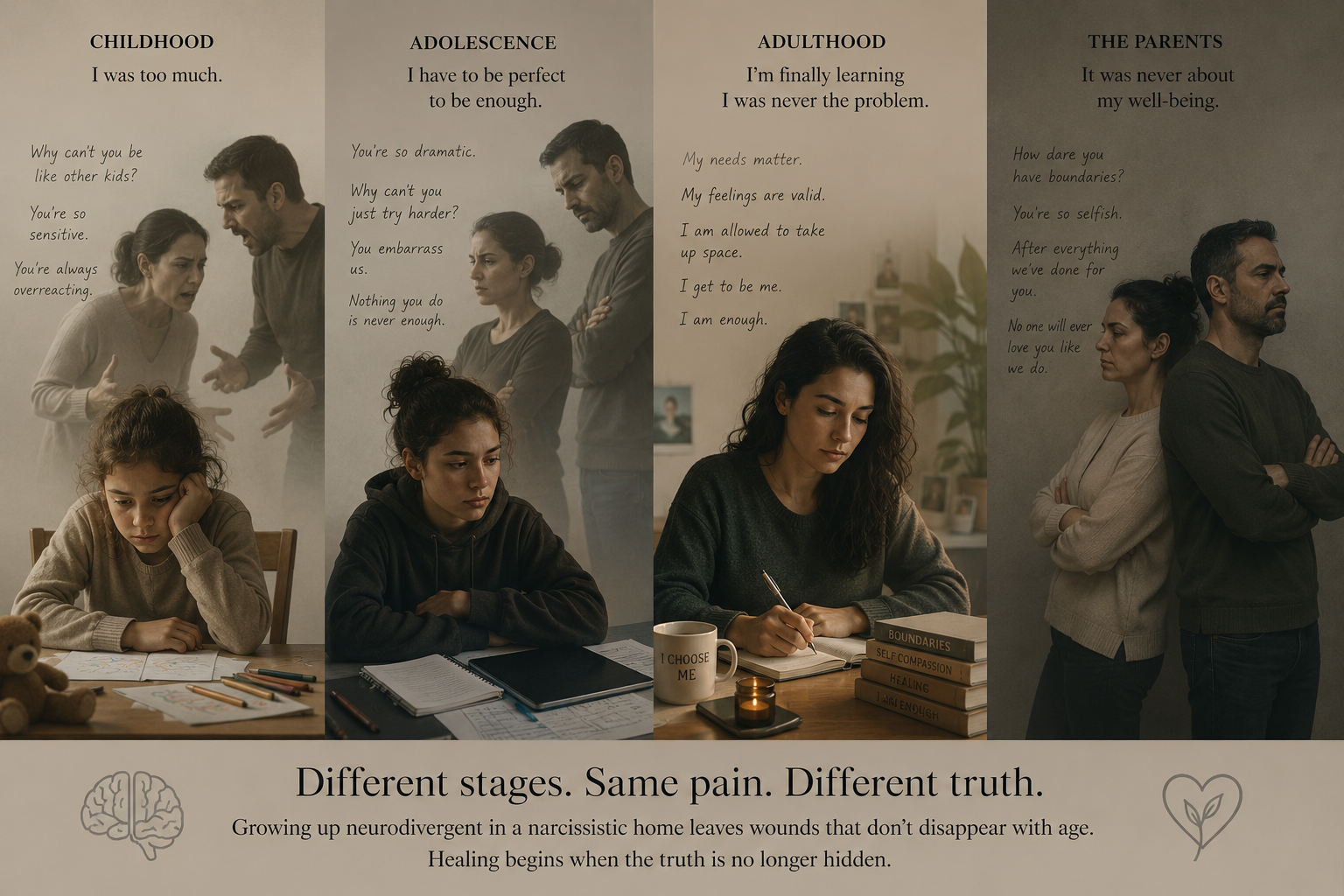

Narcissism vs. Neurodivergence: Why They Get Confused — and Why They’re Not the Same
Autism, ADHD, and Narcissistic Personality Disorder (NPD) can sometimes look similar on the surface, but they are fundamentally different. Learn the differences between neurodivergence, narcissistic traits, empathy, emotional dysregulation, and narcissistic rage.

When Neurodivergent People End Up in Narcissistic Relationships
Autistic, ADHD, and AuDHD adults are often vulnerable to narcissistic abuse. Learn why neurodivergent people are targeted, how gaslighting affects ND relationships, and what healing can look like.

Different Wiring, Different Words: Why You've Been Translating Your Whole Life
If you've ever walked away from a conversation feeling confused, exhausted, or like you said the wrong thing without knowing why — you've been translating. And you've probably been doing it your whole life.

Too Cold or Too Much? The Truth About Neurodivergent Empathy
One of the most persistent myths about neurodivergent people is that they lack empathy. That they don't feel. That they don't care. It is one of the most wrong things the clinical world ever said — and many neurodivergent people are still carrying the weight of it.

Why Being Neurodivergent in the Workplace Is So Challenging
You're intelligent. You're capable. You care deeply about your work. So why does the workplace feel like it was designed for someone else entirely? If you're neurodivergent, you're not imagining it.

What Is Masking and How Does It Affect Mental Health?
If you've ever felt exhausted after social interactions or found yourself acting like a completely different person depending on who you're around — you may be familiar with masking.