Growing Up Neurodivergent With a Narcissistic Parent
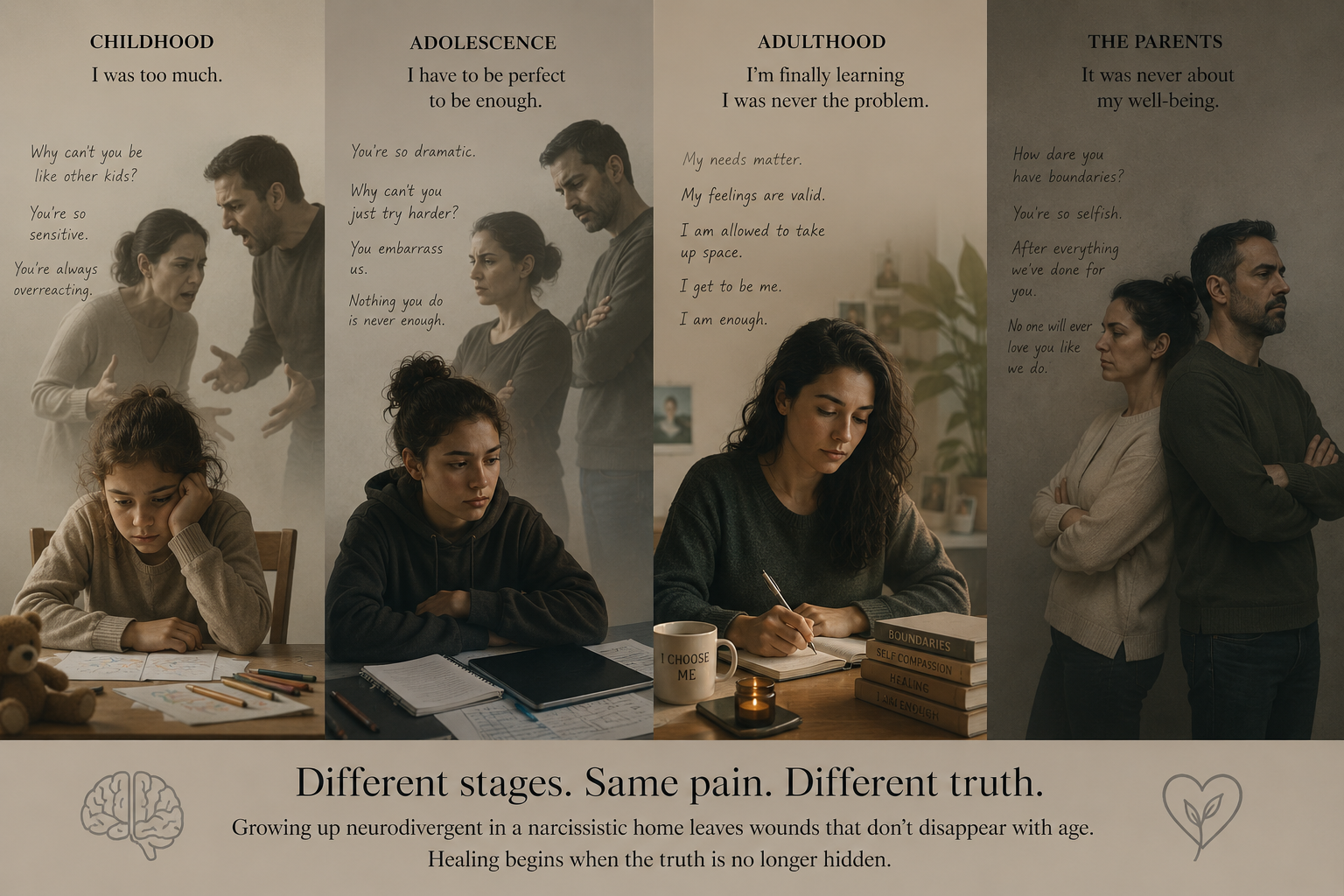
For many people, the first narcissistic relationship they ever experienced was not romantic.
It was parental.
If you grew up autistic, ADHD, AuDHD, or otherwise neurodivergent with a narcissistic parent, childhood may have felt emotionally unsafe long before you had language for why. You may have learned to monitor moods instead of trusting your own needs. You may have grown up believing your sensitivity, emotional intensity, sensory needs, or neurodivergent traits were the problem.
The impact of narcissistic parenting on neurodivergent children can be profound. Growing up with chronic criticism, emotional invalidation, gaslighting, conditional love, or emotional unpredictability shapes the nervous system, attachment patterns, self-esteem, and sense of identity in lasting ways.
Many neurodivergent adults do not realize until much later that what they experienced was emotional abuse.
Why Neurodivergent Children Are Especially Vulnerable to Narcissistic Parenting
Autistic and ADHD children often require more emotional attunement, flexibility, co-regulation, patience, and nervous system support than neurotypical children.
Not because they are “too much.”
Because their brains and nervous systems process the world differently.
Neurodivergent children may experience:
heightened sensory sensitivity
emotional dysregulation
social overwhelm
executive functioning difficulties
strong attachment needs
difficulty masking stress or distress
Healthy parenting for neurodivergent children requires emotional responsiveness and adaptability.
A narcissistic parent often cannot consistently provide that.
In narcissistic family systems, the parent’s emotional needs, image, control, validation, or comfort typically take priority over the child’s developmental needs. A child’s emotions may be treated as inconvenient, embarrassing, dramatic, disrespectful, or threatening.
For a neurodivergent child — who often already feels different or misunderstood — this can create deep psychological wounds.
Signs of Narcissistic Parenting Toward Neurodivergent Children
Every family system is different, but many autistic and ADHD adults raised by narcissistic parents describe similar patterns.
Your Neurodivergent Traits Were Criticized or Shamed
Your sensory sensitivities, meltdowns, emotional reactions, communication style, routines, or special interests may have been treated as character flaws rather than nervous system needs.
Instead of support, you may have received:
criticism
punishment
mockery
emotional withdrawal
humiliation
chronic invalidation
It might have played out in your household like this:
Maybe you were overwhelmed by noise, texture, or change and were called dramatic instead of supported. Maybe your parent mocked your special interests, imitated your tone of voice, punished you for emotional dysregulation, or accused you of “doing it for attention” when you were clearly distressed. What should have been understood as nervous system overwhelm became framed as a personal failure.
Many neurodivergent adults internalize the belief that their authentic self is unacceptable.
You Learned to Monitor the Parent’s Emotions
Many children of narcissistic parents become hypervigilant.
You may have learned to:
scan for mood changes
avoid triggering the parent
suppress your own needs
emotionally caretake the household
prioritize emotional survival over self-expression
It might have played out in your household like this:
Maybe you could tell what kind of night it was going to be from the sound of the front door closing, the way dishes were set down in the kitchen, or the expression on your parent’s face when they walked into the room. Instead of feeling free to exist as a child, your nervous system became focused on predicting moods, preventing conflict, and keeping the environment emotionally stable.
This is sometimes called parentification.
For autistic and ADHD children who are already expending enormous energy navigating sensory, emotional, and social demands, this can become emotionally exhausting.
You Were Gaslit
Gaslighting is common in narcissistic family systems.
You may have been told:
“That never happened.”
“You’re too sensitive.”
“You’re overreacting.”
“You always misunderstand things.”
“You’re remembering it wrong.”
It might have played out in your household like this:
Maybe your parent said something hurtful and later denied it entirely. Maybe they exploded at you and then acted like you were the problem for reacting emotionally. Maybe you left conversations feeling confused, guilty, or unsure of what had actually happened because your reality was constantly being rewritten in real time.
For neurodivergent children who may already struggle with social confidence or trusting their perceptions, chronic gaslighting can create long-term self-doubt and confusion.
Many neurodivergent adults raised this way grow up disconnected from their instincts because they were repeatedly taught not to trust themselves.
Love Felt Conditional
In many narcissistic households, love and approval feel earned rather than secure.
Affection may have depended on:
masking successfully
being quiet or compliant
achieving highly
avoiding emotional needs
making the parent look good
not embarrassing the family
It might have played out in your household like this:
Maybe your parent was warm, affectionate, or proud of you when you performed well, stayed agreeable, or reflected positively on them — but distant, critical, irritated, or emotionally withdrawn when you were overwhelmed, dysregulated, struggling, or visibly neurodivergent. You may have learned very early that being fully yourself risked losing connection, approval, or emotional safety.
This creates deep attachment wounds.
Many autistic and ADHD adults raised by narcissistic parents grow up believing they must perform, overfunction, or suppress themselves in order to deserve love.
Your Achievements Were Controlled, Dismissed, or Claimed
Accomplishments may have been:
minimized
criticized
ignored
turned into competition
used to enhance the parent’s image
It might have played out in your household like this:
Maybe your achievements were only celebrated when they made the parent look good to other people. A good grade, award, diagnosis, career milestone, or talent may have quickly become their story to tell — proof of their parenting, sacrifice, or superiority. Other times, accomplishments may have been dismissed entirely, especially if your growing confidence or independence threatened the parent’s sense of control.
Some neurodivergent adults also describe feeling like nothing was ever enough. Success moved the bar instead of meeting it. The moment you achieved something, the focus shifted to what you had not done yet, how someone else did it better, or why your accomplishment was still somehow disappointing.
Over time, this can create a painful relationship with achievement itself — where success feels tied to pressure, performance, guilt, or fear instead of pride or fulfillment.
Some narcissistic parents only celebrate achievements that reflect positively on them. Others become threatened when the child develops independence, confidence, or identity outside the parent’s control.
How Narcissistic Parenting Affects Neurodivergent Adults
The effects of narcissistic parenting often continue well into adulthood.
Many neurodivergent adults raised in narcissistic family systems struggle with:
chronic shame
hypervigilance
people pleasing
masking
emotional burnout
difficulty setting boundaries
self-doubt
attachment trauma
fear of conflict or rejection
over-apologizing
difficulty identifying their own needs
tolerance for unhealthy relationships
It might show up in your adulthood like this:
Maybe you find yourself rehearsing conversations before they happen, apologizing automatically even when you have done nothing wrong, or feeling responsible for managing everyone else’s emotions in a room. Maybe you struggle to relax around other people because your nervous system is constantly scanning for shifts in tone, disappointment, criticism, or rejection.
Some neurodivergent adults raised this way become chronic people pleasers. Others become intensely hyper-independent because needing support once felt unsafe, humiliating, or emotionally expensive. Many fluctuate between both.
Many also develop a distorted relationship with their neurodivergence itself.
Instead of understanding autism or ADHD as a neurological difference, they grow up believing their traits are evidence that they are difficult, selfish, dramatic, lazy, or impossible to love.
This is one reason many neurodivergent adults experience profound grief after receiving a late autism or ADHD diagnosis. The diagnosis often reframes years of shame through an entirely different lens.
For many people, one of the most painful realizations is understanding that they spent years trying to fix a character flaw when what they actually needed was support, accommodation, safety, and understanding.
Why Neurodivergent Adults Often End Up in Similar Relationships Later
Children raised by narcissistic parents often normalize emotional inconsistency, invalidation, and conditional love.
As adults, this can make emotionally manipulative relationships feel strangely familiar.
Many neurodivergent adults raised by narcissistic parents later find themselves in relationships involving:
gaslighting
emotional manipulation
emotional neglect
controlling behavior
narcissistic abuse
chronic criticism
unstable attachment dynamics
It might show up in your adulthood like this:
Maybe you find yourself drawn to people who feel emotionally intense, unpredictable, or difficult to “figure out.” Maybe inconsistency feels strangely familiar, while calm, emotionally safe relationships feel uncomfortable or even boring at first. You may tolerate criticism, emotional withdrawal, or boundary violations far longer than you should because your nervous system learned early that love often came with confusion, anxiety, or self-abandonment.
Some neurodivergent adults also become deeply susceptible to overexplaining, people pleasing, or constantly trying to “earn” emotional stability in relationships. When you grew up believing connection depended on managing someone else’s moods, it can feel natural to keep working harder instead of recognizing that the relationship itself is unhealthy.
Not because you are weak — but because those patterns became associated with love, safety, and attachment early in life.
Healing From Narcissistic Parenting as a Neurodivergent Adult
Healing involves more than recognizing that your parent was narcissistic.
It often involves grieving the childhood support, safety, emotional attunement, and protection you did not receive.
For many autistic and ADHD adults, healing means:
rebuilding trust in your own perceptions
learning that your needs are legitimate
separating your identity from shame
understanding your neurodivergent traits differently
developing boundaries without guilt
learning what safe relationships actually feel like
Maybe healing looks like noticing how quickly you apologize for existing. Maybe it looks like realizing you feel anxious every time you disappoint someone, ask for help, or express a need. Maybe it means recognizing that your body still braces for criticism even in emotionally safe environments because your nervous system learned early that love could disappear without warning.
For many neurodivergent adults, one of the hardest parts of healing is learning that accommodation is not selfish, boundaries are not cruelty, and emotional safety is not something that has to be earned through performance.
Most importantly, healing means understanding this:
Your neurodivergence was never the problem.
The problem was being taught that your needs, emotions, sensitivities, and differences were burdens instead of human realities deserving care.
You Deserved to Be Met With Understanding
If you grew up neurodivergent with a narcissistic parent, there is a good chance you spent years trying to become easier to love.
Quieter. Less emotional. Less sensitive. Less visible.
But healing is not about becoming smaller.
It is about finally learning that your nervous system deserved support, your emotions deserved safety, and your identity deserved understanding from the very beginning.
Frequently Asked Questions
What is a narcissistic parent?
A narcissistic parent is a parent who consistently prioritizes their own emotional needs, image, control, or validation over the emotional well-being of their child. Narcissistic parenting often involves emotional invalidation, gaslighting, conditional love, criticism, control, or manipulation.
Why are autistic and ADHD children vulnerable to narcissistic parents?
Neurodivergent children often require greater emotional attunement, co-regulation, flexibility, and support. Narcissistic parents may struggle to meet these needs consistently because the child’s emotional experience can feel threatening, inconvenient, or emotionally demanding to them.
What does narcissistic parenting look like for autistic children?
Narcissistic parenting may involve shaming autistic traits, criticizing emotional reactions, dismissing sensory needs, forcing masking, gaslighting, emotional neglect, or treating the child’s neurodivergence as an embarrassment or inconvenience.
Can growing up with a narcissistic parent cause trauma?
Yes. Growing up with a narcissistic parent can contribute to complex trauma, attachment wounds, chronic shame, hypervigilance, emotional dysregulation, people pleasing, and difficulty trusting yourself or others.
Why do neurodivergent adults often struggle with boundaries?
Many autistic and ADHD adults raised in narcissistic family systems learned that setting boundaries led to criticism, punishment, guilt, rejection, or emotional withdrawal. As adults, boundaries may feel unsafe or selfish even when they are necessary.
Brightmane Therapeutic Center offers neurodivergent-affirming therapy and comprehensive evaluations in California and Florida. This article is educational and is not intended to diagnose Narcissistic Personality Disorder, autism, or ADHD. If you are looking for support, contact Brightmane Therapeutic Center to learn more about our services.